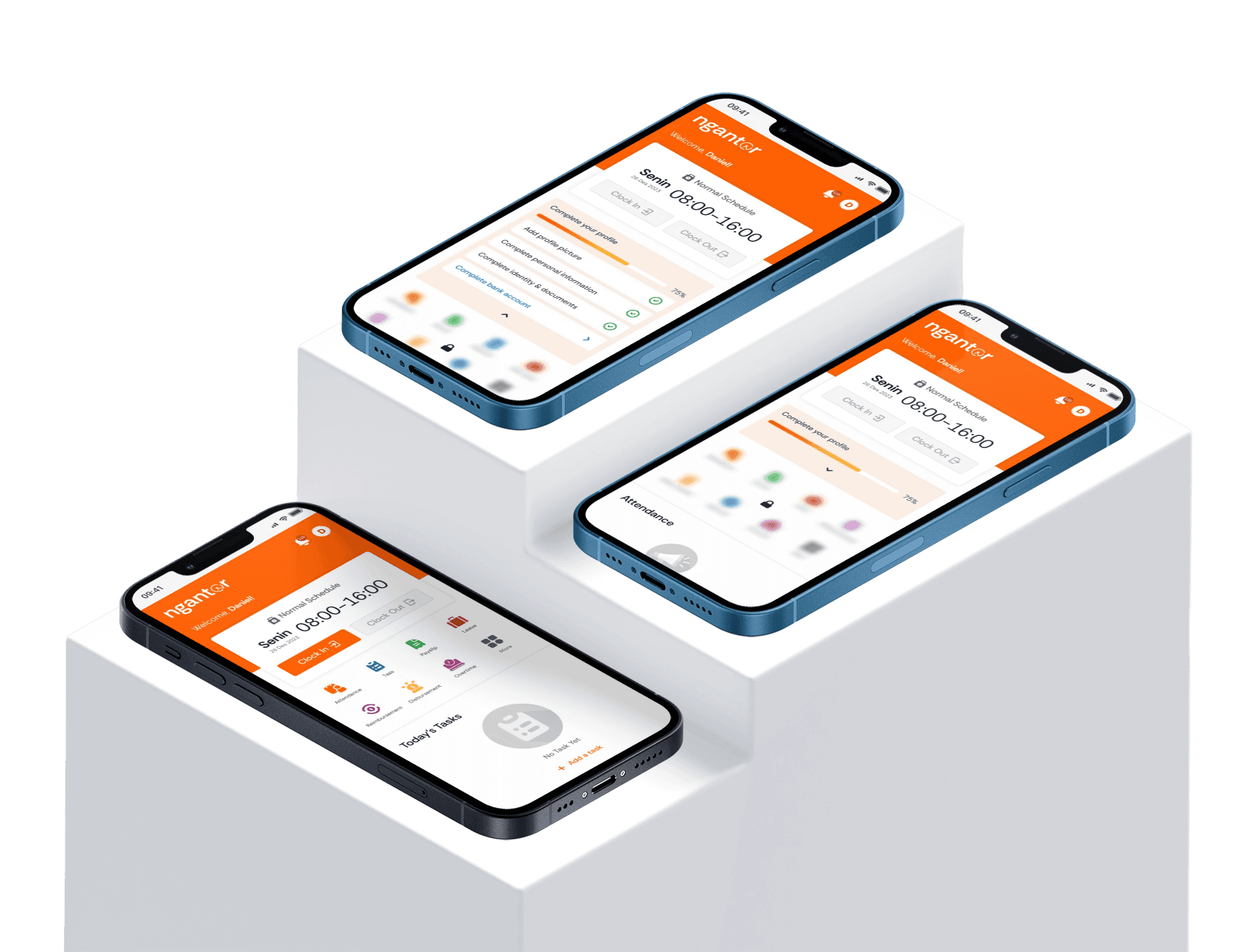
Unifying Employee Lifecycle Management with Ngantor
Ngantor is an HR management system designed to facilitate employee data management for HR teams while providing employees with seamless and self-service access.
Problem
Many small and medium-sized organizations still rely on disconnected tools and manual processes to manage employee operations. HR teams often face challenges in tracking attendance, managing leave requests, maintaining employee records, and generating reports efficiently.
As organizations grow, these fragmented workflows create operational inefficiencies, increase administrative effort, and reduce visibility into workforce data.
Goal
Design a centralized HRMS that simplifies day-to-day HR operations while providing employees and administrators with a seamless and intuitive experience.
The product aimed to:
Reduce manual HR processes
Improve visibility of employee data
Streamline attendance and leave management
Create a scalable foundation for future HR features
Support both administrative and employee workflows within a single platform
Design Process


Solution
After several iterations based on user needs, the final solution was designed to support both admin and employee workflows within a unified HRMS platform.


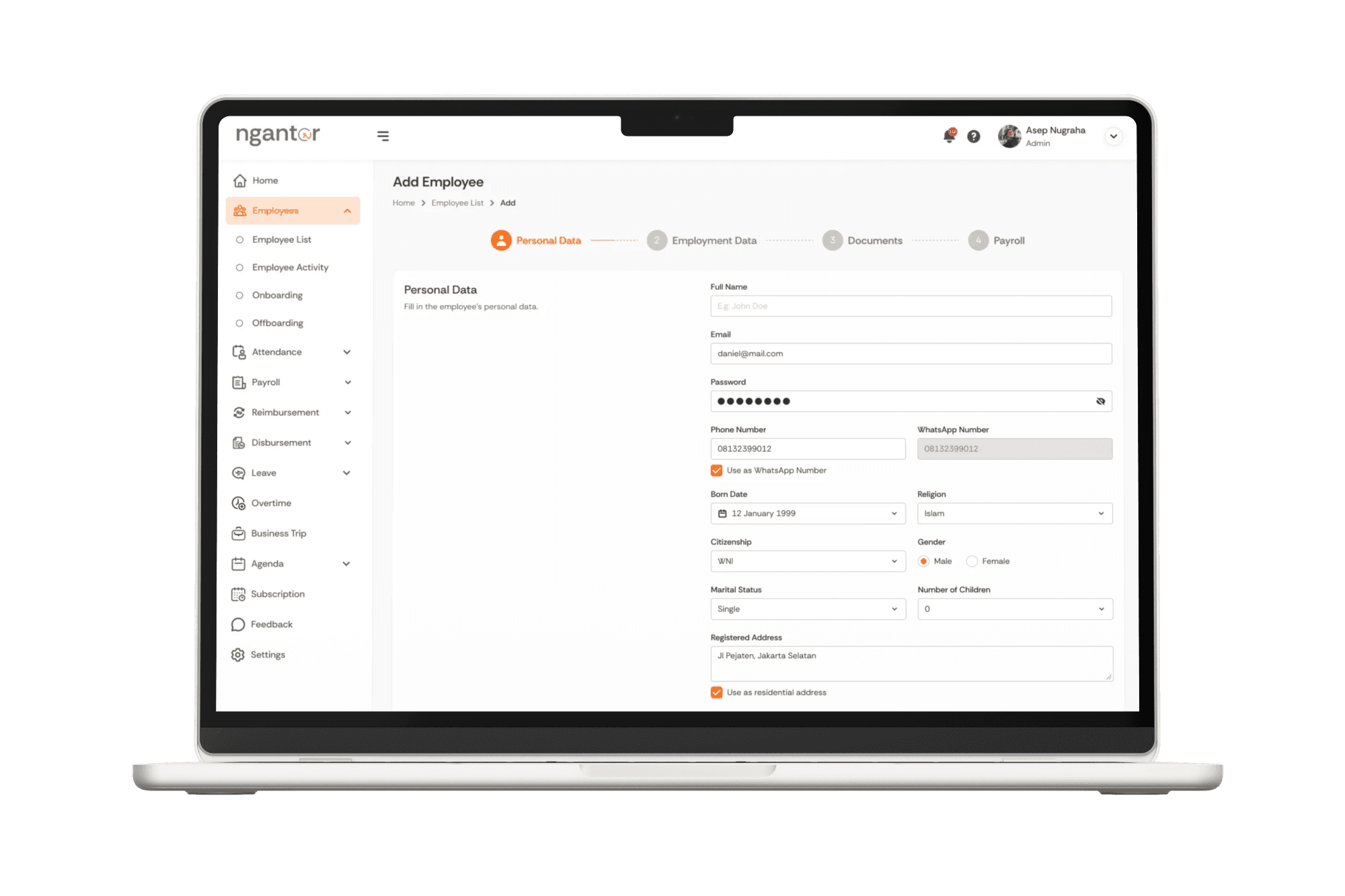
01 HR Platform
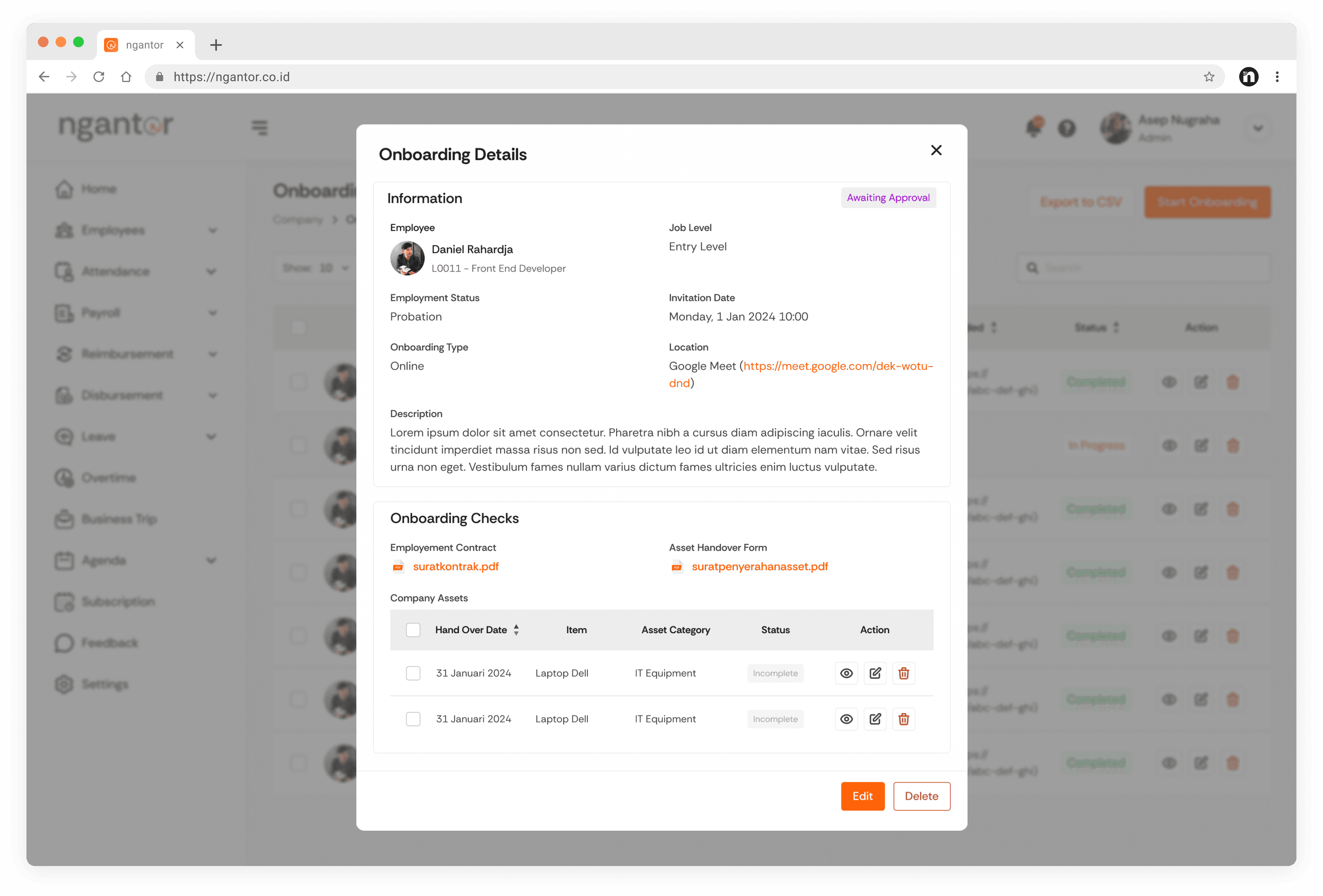
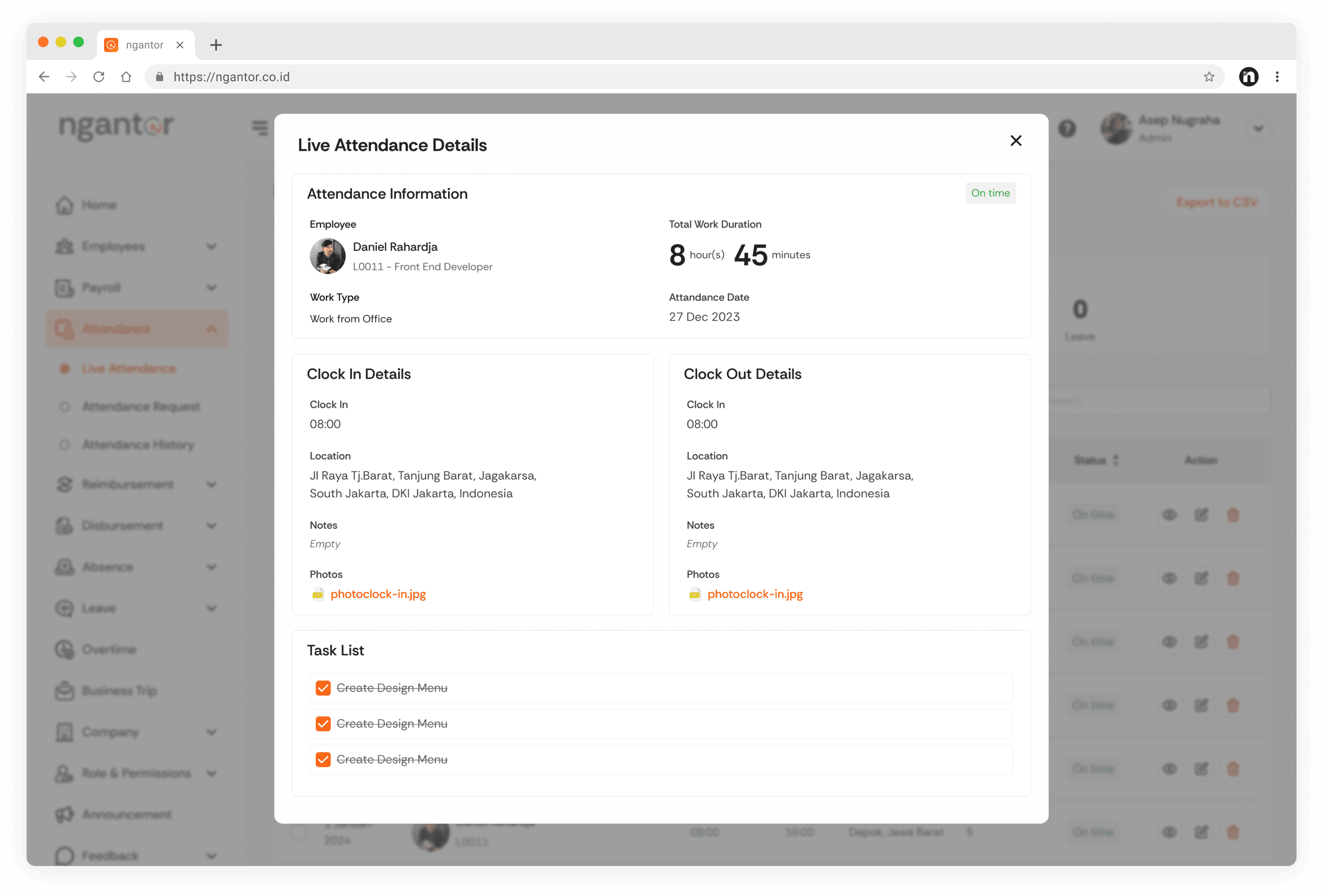
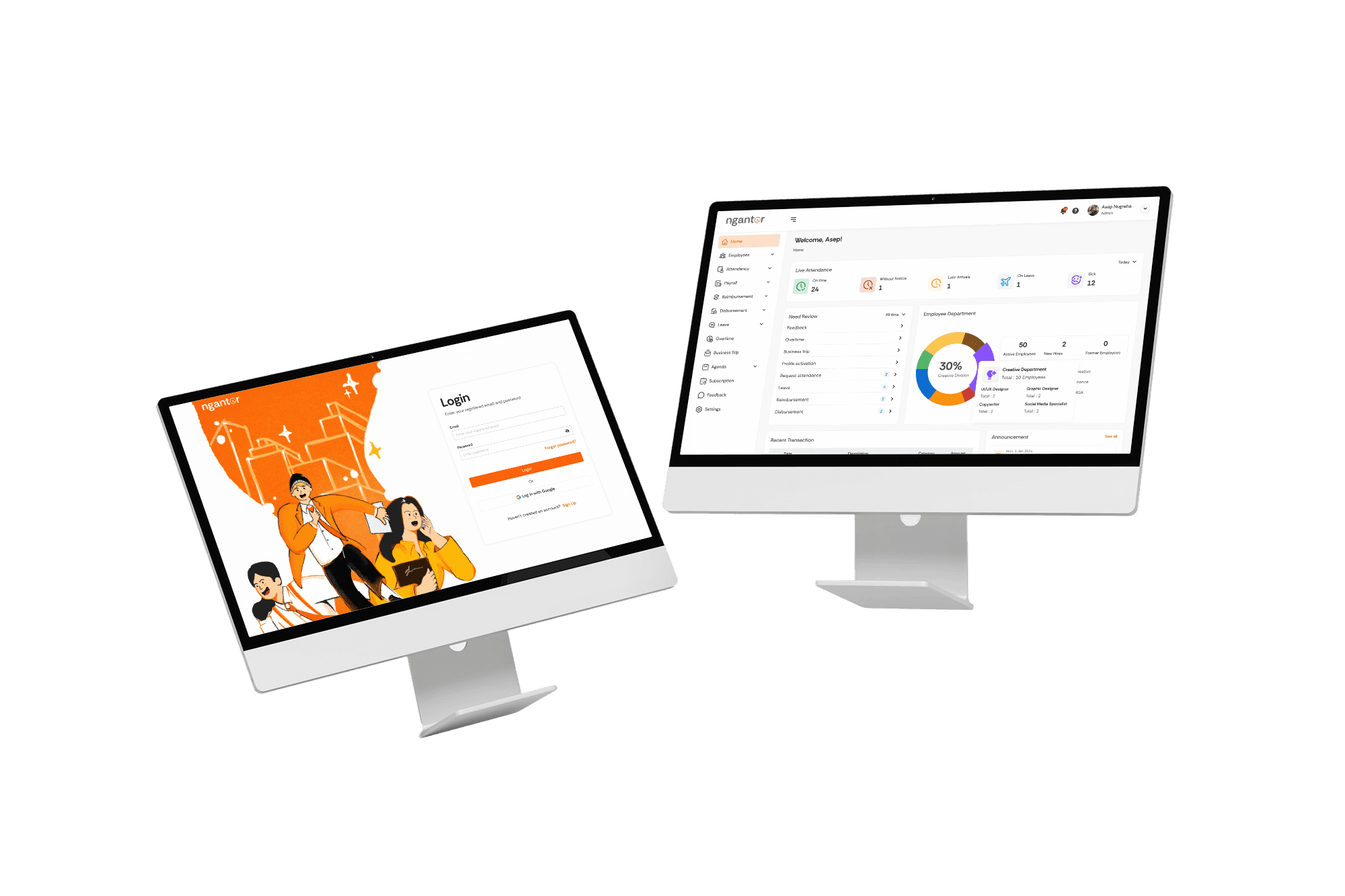
To streamline day-to-day HR operations, I designed a comprehensive admin platform that consolidates workforce management, approval workflows, and employee records into a single system. Key features include:
Dashboard
Employee Management
Attendance Management
Payroll Management
Reimbursement & Disbursement
Leave Management
Overtime Management
Business Trip Management
Agenda
Feedback
Settings


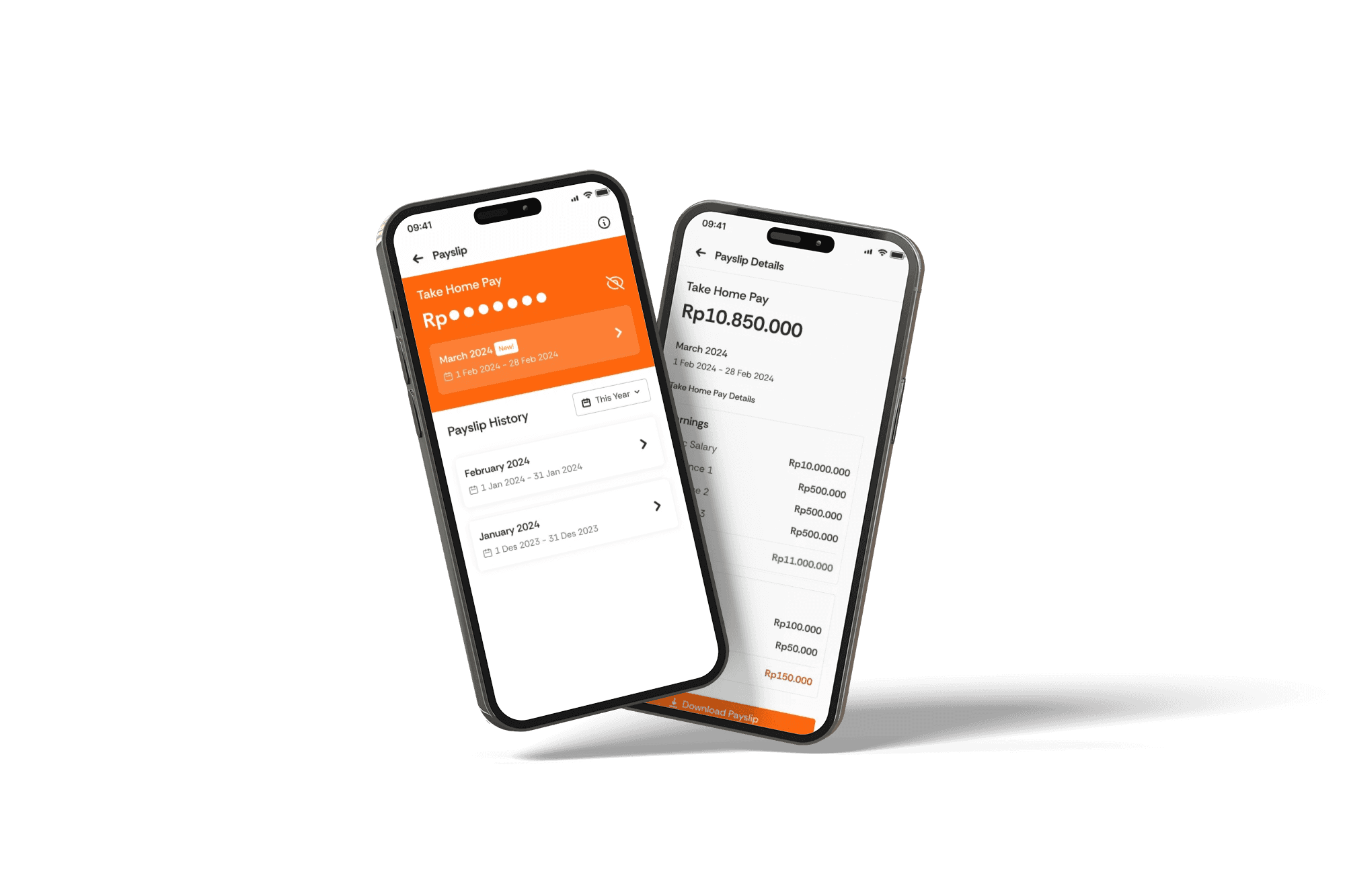
02 Employee Platform
I also designed the employee platform, allowing users to manage attendance, work activities, and administrative requests through a self-service experience. Key features include:
Live Attendance
Task Management
Payslip Access
Leave Requests
Reimbursement & Disbursement Requests
Overtime Requests
Additional employee self-service features
Outcome
When the product was used internally, key learnings began to surface
Although the product was not commercially launched due to business constraints, the solution was successfully implemented and used internally for several months.
Key outcomes:
✅ Validated core workflows through real internal usage
✅ Identified usability improvements through user feedback
✅ Established a scalable design foundation for future development
✅ Reduced ambiguity during development through structured design documentation and handoff
Retrospective
What did this project teach me?
Looking back, this project strengthened my ability to make product decisions amid ambiguity and limited domain expertise. It also highlighted the value of staying involved beyond the design phase, as continued engagement with development and user feedback provided insights that informed future design decisions.